


Pregnancy Milk Sales Drop: Is It Cost, Choice, or Medical?

According to Halodoc, not all pregnant women are required to consume pregnancy milk if their nutritional needs are already met through a balanced diet. However, pregnancy milk is rich in benefits, being high in calcium, vitamin D, protein, and other essential nutrients that greatly support the health of the mother and the development of the fetus.
(Source:https://www.halodoc.com/artikel/minum-susu-saat-hamil-perlu-enggak-sih?srsltid=AfmBOorCEKec-6GeDHqMtjL6nF8lt81E98LpePgDBNEtyDZo3SIfx-Uf)
The question is, how the Indonesian public perceives pregnancy milk? and what the current consumption patterns are? To address this, this study combines survey results from respondents with sales data from POS (Point of Sales), providing a more comprehensive picture of consumer trends and behavior.
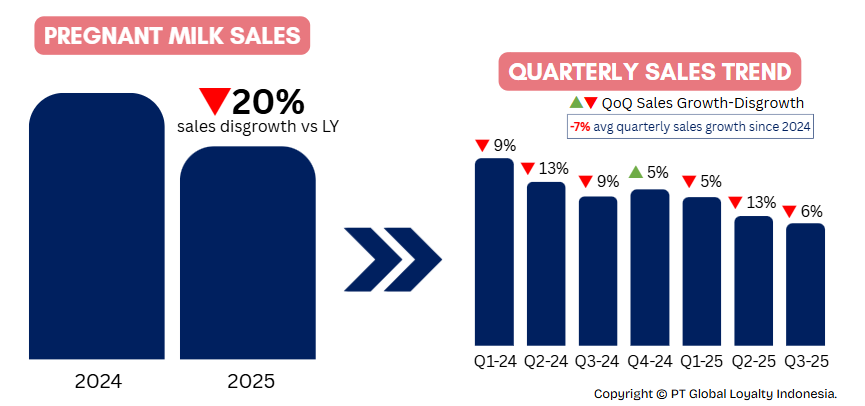
Based on transaction data, pregnancy milk sales have shown a significant decline of approximately 20% compared to the previous year. This downward trend has been consistent from the first quarter of 2024 through the third quarter of 2025.
Source: Data POS Tracking
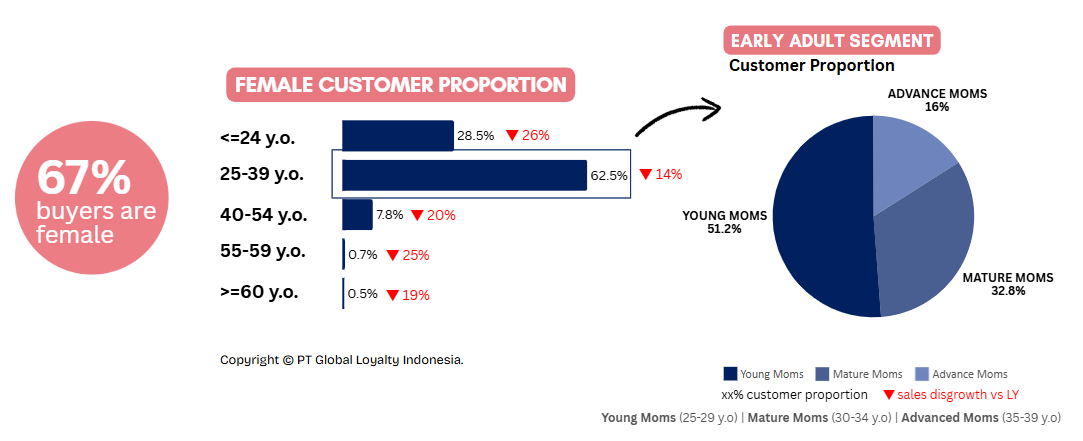
The majority of pregnancy milk buyers are women, particularly those aged 25–39, the young mothers group. However, the decline in sales is not limited to this group; it is observed across all age ranges, indicating a widespread shift in the perceived need for pregnancy milk, trending downward across the board.
Source: Data POS Tracking
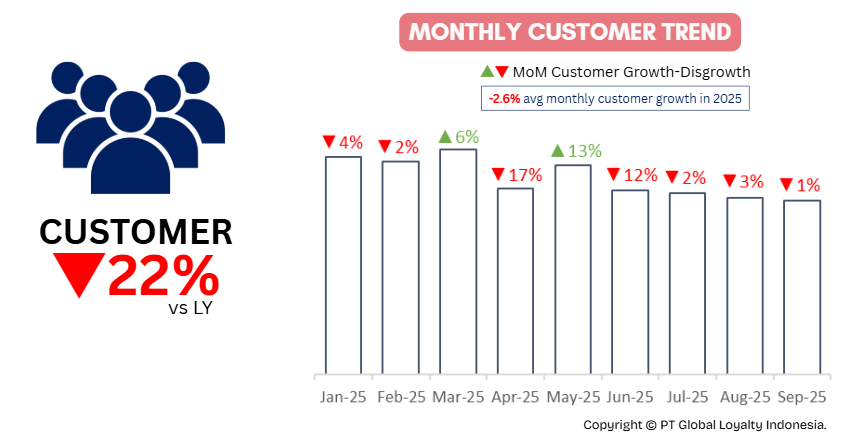
A deeper analysis of the causes behind the sales decline shows that it is primarily driven by a decline in the number of customers, which fell by 22% compared to last year. This decline is also reflected in monthly trends, showing consistent negative growth and indicating weak customer retention from month to month.
Source: Data POS Tracking
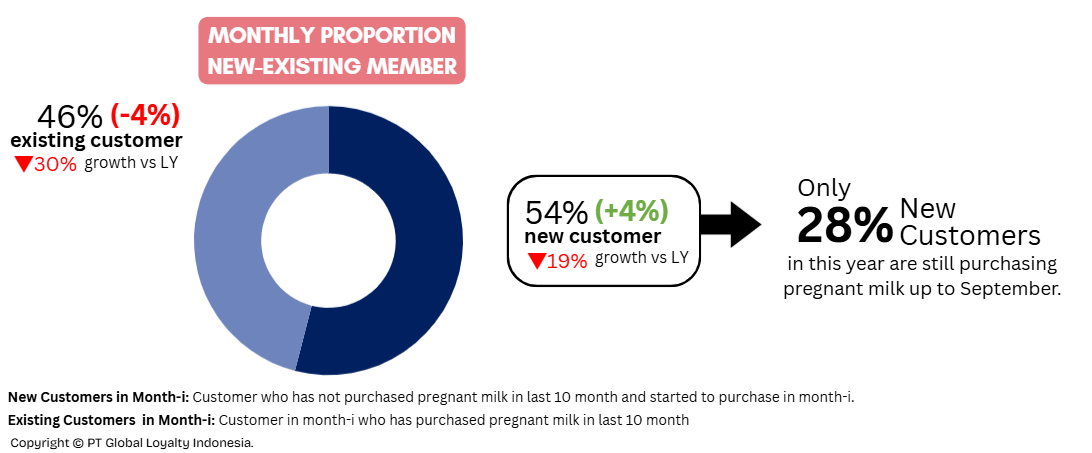
When examined further, the decline affects both existing and new customers. Existing customers, who now make up 46% of the total base, experienced a significant drop of 30%. Meanwhile, although the proportion of new customers increased to 54%, their number still fell by 19% compared to the previous year. Among these new customers, only about 28% made repeat purchases, highlighting that retaining pregnancy milk customers remains a distinct challenge.
Source: Data POS Tracking
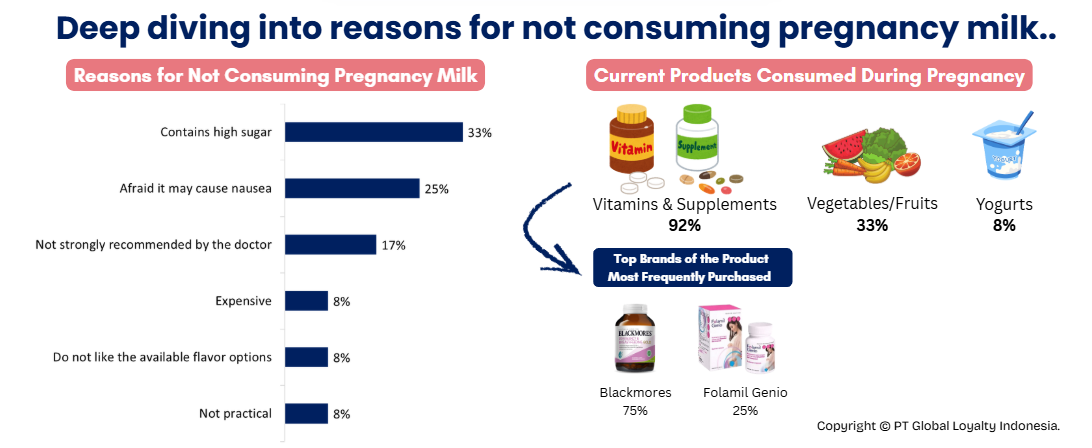
From the survey results, we explored the reasons why some pregnant women have never consumed pregnancy milk. Several respondents felt that pregnancy milk tastes too sweet, which they feared could trigger nausea. In addition, some mothers mentioned that their doctors did not provide a strong recommendation to consume pregnancy milk.
As an alternative, pregnant women tend to choose other sources of nutrition. Their primary choices are vitamins and supplements, with brands such as Blackmores or other doctor-recommended supplements being the most commonly consumed, usually 1–3 times per day. Some respondents even felt that their nutritional needs were already met through their daily food, such as vegetables and fruits, making the addition of pregnancy milk unnecessary.
Source: Customer Insight
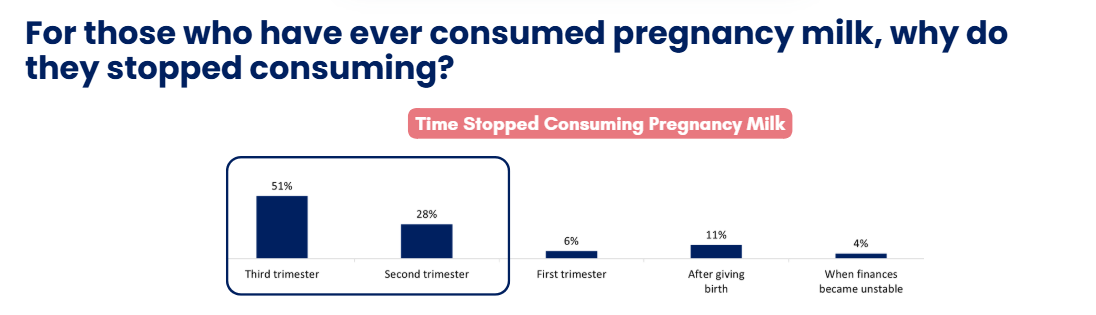
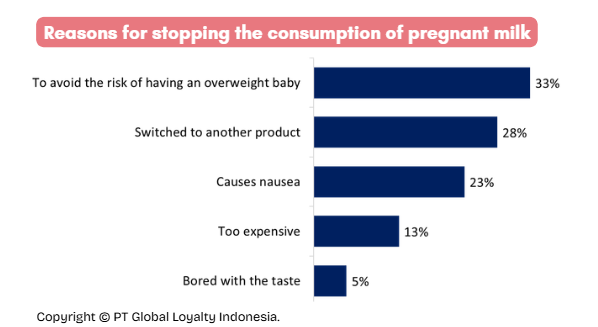
We also explored the reasons why some pregnant women stopped consuming pregnancy milk. The survey showed that most mothers who had previously consumed it regularly tended to stop in the later stages of pregnancy. Some stopped during the second trimester, but the majority did so in the third trimester. At this stage, their primary concern was that consuming pregnancy milk might cause the baby to become overweight.
Source: Customer Insight
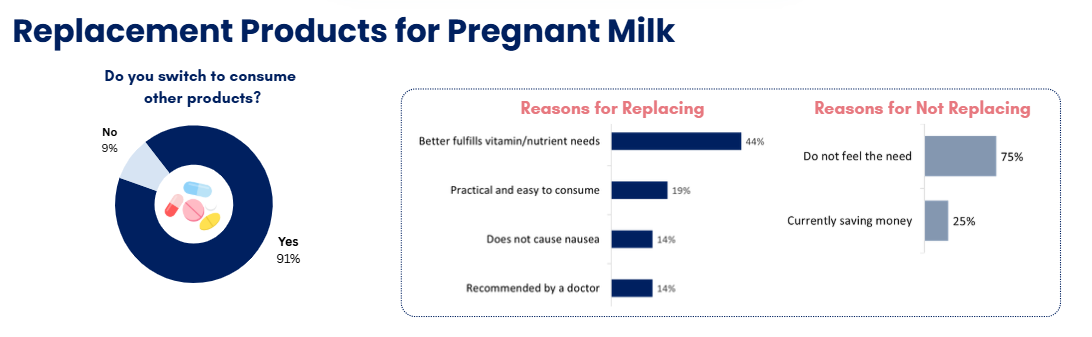
After stopping pregnancy milk, a small portion of mothers did not switch to other products because they felt their nutritional needs were already met or wanted to save money. However, the majority switched to alternative products. They considered these products to have more complete nutritional content, be easier to consume, less likely to cause nausea, and recommended by doctors. Most switched to vitamins and supplements, such as Blackmores or other doctor-recommended products, usually taken 1–3 times per day. In addition, some mothers felt that their daily intake of vegetables and fruits was sufficient to meet their nutritional needs.
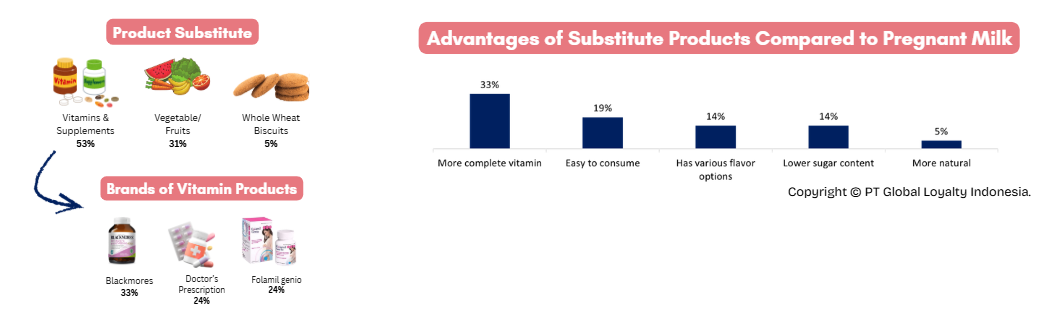
Source: Customer Insight
From this group of pregnant women, we also asked about their interest in consuming pregnancy milk in the future. About 42% of those who had never consumed pregnancy milk stated they were unlikely to consume, as they felt their nutritional needs could be met through other means and the product was not strongly recommended by their doctors. Meanwhile, 59% of mothers who had previously stopped consuming pregnancy milk indicated they were likely to consume it again to support their nutritional needs.
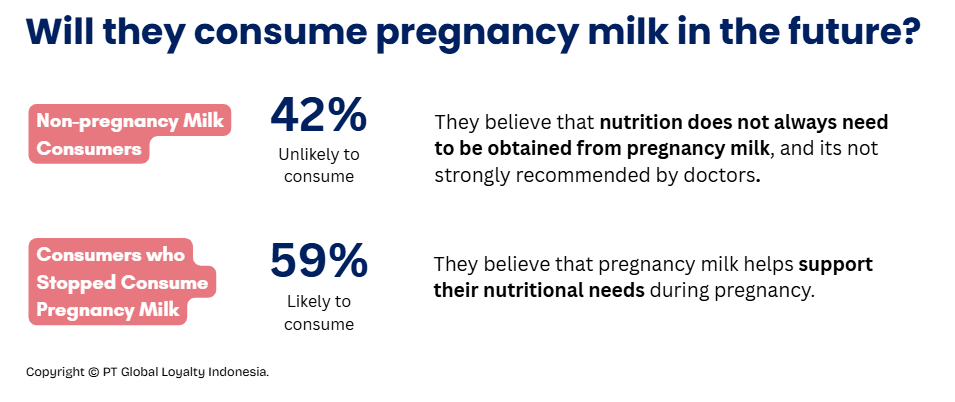
Source: Customer Insight
So, it can be said that the decline in pregnancy milk sales is mainly due to changing perceptions among pregnant women, who feel their nutritional needs can be met through nutritious foods as well as more convenient vitamins and supplements recommended by doctors. Both new and existing customers have decreased, and the low repeat purchase rate among new customers highlights the challenge of retaining consumption. As a result, pregnancy milk is increasingly not seen as an essential need by many pregnant women today.
We hope these insights and data are beneficial for you. If you want to know more about your product’s performance, we can help. With over 22 million members and millions of daily transactions, we provide in-depth analysis of customer behavior and product performance to support your business decisions.
(Business Analyst Alfagift/Image Doc. Photo by Matilda Wormwood on Pexels).