

Strategies of Pregnant Women in Maintaining Nutrition During Ramadan Fasting

During the month of Ramadan, eating patterns change due to the restriction of food intake to pre-dawn (suhoor) and iftar. For pregnant women, this condition becomes more challenging as nutritional requirements increase to support maternal health and fetal growth and development. The limited eating window, combined with the physical changes experienced during pregnancy, encourages pregnant women to make various adjustments to maintain adequate nutritional intake.
Therefore, it is important to understand the strategies used to fulfill nutritional needs during fasting and how these strategies affect daily consumption patterns, in order to provide a more comprehensive understanding of the needs and behaviors of pregnant women during Ramadan. For this purpose, we conducted interviews with several pregnant women to explore their experiences, strategies, and considerations in managing nutritional intake during fasting.
The findings reveal four key considerations in pregnant women’s decisions about fasting during pregnancy:

- Mother’s health: The mother is in good physical health, with stable blood pressure, normal hemoglobin (Hb) levels, and appropriate weight gain for her gestational age. Additionally, she does not experience excessive nausea, vomiting, or spotting/bleeding.
- Fetal health: Fetal health is confirmed based on ultrasound examination results. During the mid to late trimesters, fetal well-being can be further assessed through adequate amniotic fluid levels, appropriate fetal weight for gestational age, and active fetal movements.
- Husband’s support: The husband supports the pregnancy by assisting with daily needs (e.g., arranging catering to reduce physical strain) and seeking information about nutrition and maternal health, helping the mother feel more comfortable and supported.
- History of pregnancy: Previous pregnancy experience has made the second pregnancy more planned and well-managed, with improved knowledge and readiness based on previously gained information and shared experiences.
These considerations form the basis for pregnant women’s decisions about whether they feel safe and confident fasting during pregnancy.
To help inform these decisions, pregnant women rely on multiple sources of information to support their decision to fast, ranging from healthcare professionals to friends’ experiences.

Healthcare professionals are the most trusted source, as their recommendations are based on pregnancy check-up results (OB-GYNs in urban areas and midwives in rural areas). Social media platforms such as Instagram and TikTok, along with friends’ experiences of fasting while pregnant, also help increase confidence in deciding whether to fast. Between these two sources, social media is generally considered more trustworthy than friends’ experiences.
Despite requiring more effort than usual, pregnant women who fast report several dietary, physical, psychological, and spiritual benefits:

- Improves control over eating habits: Fasting helps mothers become more aware of the amount and types of food they consume, which may reduce excessive snacking or the intake of high-sugar foods.
- Provides rest for the digestive system: The digestive system gets a break from continuous food intake, which helps reduce discomfort such as bloating or nausea.
- Psychological and spiritual benefits: Mothers feel emotional and spiritual fulfillment from participating in fasting, which can contribute to better mental and spiritual well-being.
These perceived benefits help explain why many pregnant women remain motivated to fast despite the additional physical demands during pregnancy
However, concerns remain and tend to vary across different stages of pregnancy:
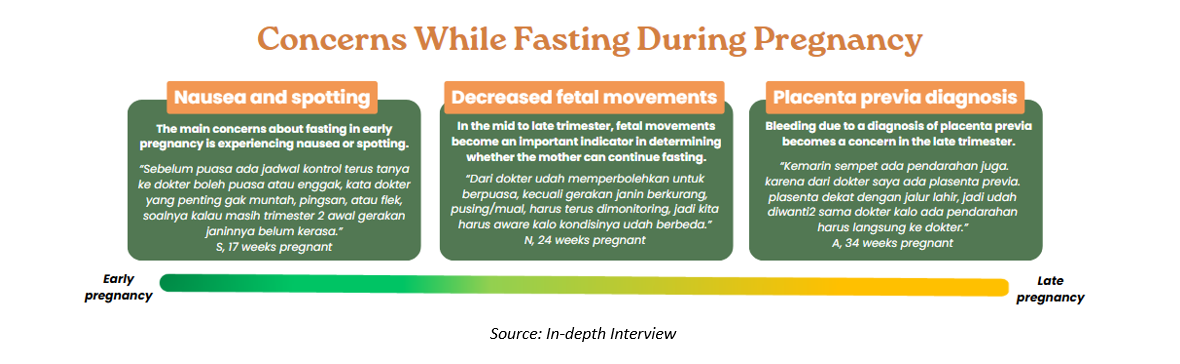
- Nausea and spotting: The main concerns about fasting in early pregnancy are experiencing nausea or spotting.
- Decreased fetal movements: In the mid to late trimester, fetal movements become an important indicator in determining whether the mother can continue fasting.
- Placenta previa diagnosis: Bleeding due to a diagnosis of placenta previa becomes a concern in the late trimester.
These concerns highlight that, while fasting may offer perceived benefits, pregnant women continue to monitor their physical condition and fetal well-being closely throughout pregnancy.
To manage these concerns while continuing to fast, pregnant women generally adopt several strategies:

- Reducing cooking: Reducing cooking activities by purchasing ready-made dishes for suhoor and iftar, either through catering services or from local food stalls (warteg).
- Daytime naps: Daytime naps become important to recharge energy, as fasting can lead to fatigue and mothers need to wake up early for suhoor.
- Staying Active: The body needs to remain active by engaging in light daily activities and getting sunlight exposure to maintain energy levels and overall health during fasting.
- Frequent prenatal visits: Prenatal visits become more frequent, increasing from once a month to twice a month, to monitor maternal and fetal well-being during fasting.
By applying these strategies, pregnant women aim to reduce physical strain and closely monitor both maternal and fetal health while fasting.
In addition to these strategies, pregnant women also need to pay attention to their nutritional intake during suhoor and iftar. The key nutritional considerations are summarized in the figure below.
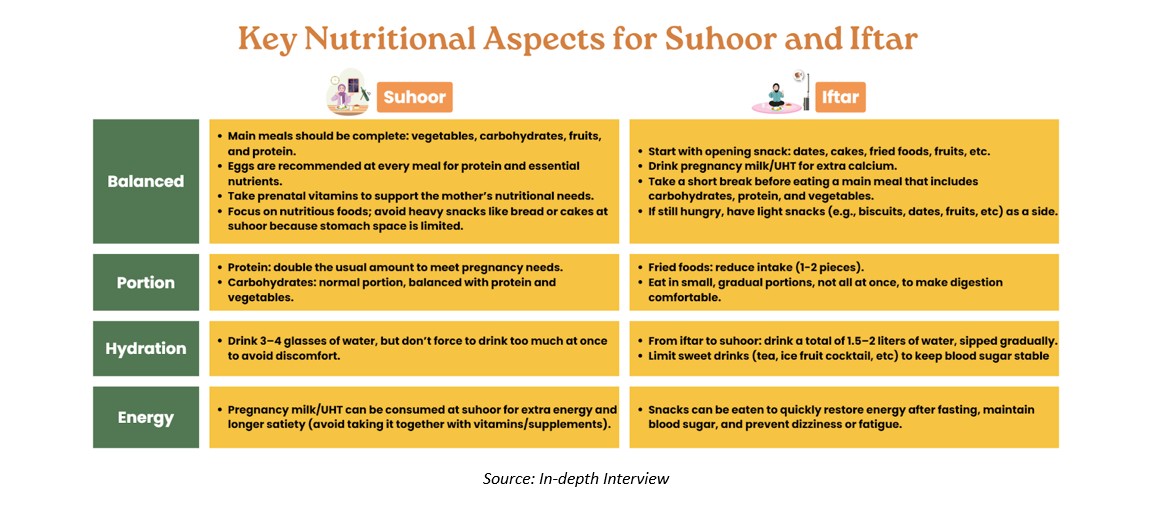
By maintaining balanced nutrition, appropriate portions, adequate hydration, and sufficient energy intake, pregnant women can better support their health and fetal development while fasting.
As illustrated in the figure, pregnancy milk can also be consumed during suhoor or iftar as an additional source of energy and nutrients. This highlights the role of pregnancy milk as a complementary nutritional source for pregnant women during fasting. Among pregnancy milk brands purchased by pregnant women in minimarkets, Prenagen records the highest sales contribution, followed by Anmum.

When choosing pregnancy milk, they mainly consider the product’s nutritional content and its suitability for their maternal condition. In addition to pregnancy milk, UHT milk is also viewed as an alternative source of nutrition. This is reflected in purchasing behavior, where UHT milk appears as the most commonly co-purchased category in pregnancy milk transactions.

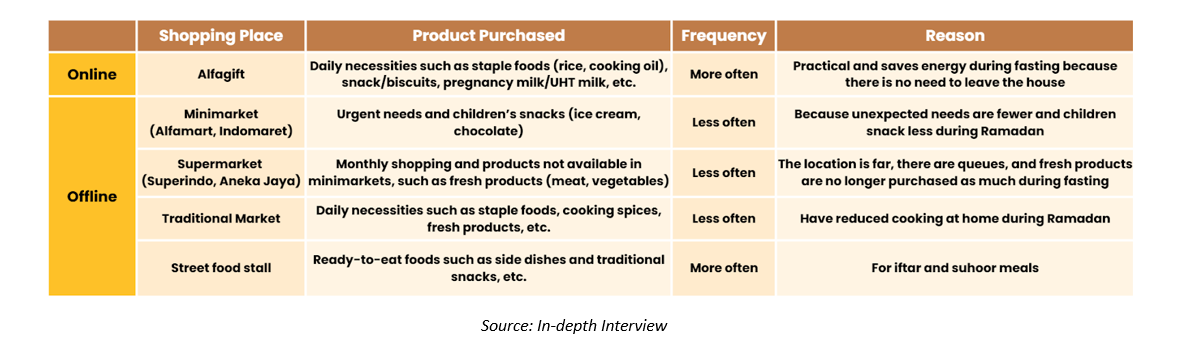
Pregnant women who fast also show distinct shopping patterns during Ramadan. Their spending increases by more than 50%, mainly driven by catering services and purchases of side dishes, traditional foods, and snacks for iftar and suhoor. To reduce physical effort while fasting, they tend to rely more on online platforms such as Alfagift for daily necessities. Meanwhile, reduced cooking at home leads to more frequent purchases of ready-to-eat dishes from street food stalls.
In conclusion, pregnant women who fast during Ramadan carefully consider their health, fetal well-being, and medical advice before deciding to fast. During fasting, they adopt various strategies to manage the physical demands and maintain balanced nutrition during suhoor and iftar. Meanwhile, their daily routines during Ramadan also influence their shopping behavior, with greater reliance on practical options such as online purchases and ready-to-eat foods.
We hope these insights and data are helpful to you. If you’d like to learn more about your product, we can assist you further, as we have access to over 22 million members and millions of daily transactions for in-depth analysis, including consumer behavior and other product data.